Making your first toy: resin, vinyl or sofubi, and where to produce
The three ways I know to produce an art toy, your own resin printer, a factory abroad, or a sofubi workshop in Japan, with the run sizes, costs and trade-offs of each.
When people asked me how to make their first toy, the real question underneath was usually: where? There are three main options, and each one suits a different stage. I have used all three.
1. Your own resin 3D printer
What it is: you print the figure yourself, in resin, at home or in your studio.
- Good: the cheapest way to start. You control everything, you can make ten, paint them, sell them and make ten more. The quality of modern printers is very good.
- Hard: resin parts are more fragile than vinyl. Liquid resin is messy, and its fumes need proper ventilation. And you will spend a lot of time sanding.
- Best for: testing a design and small runs, roughly under a hundred pieces.
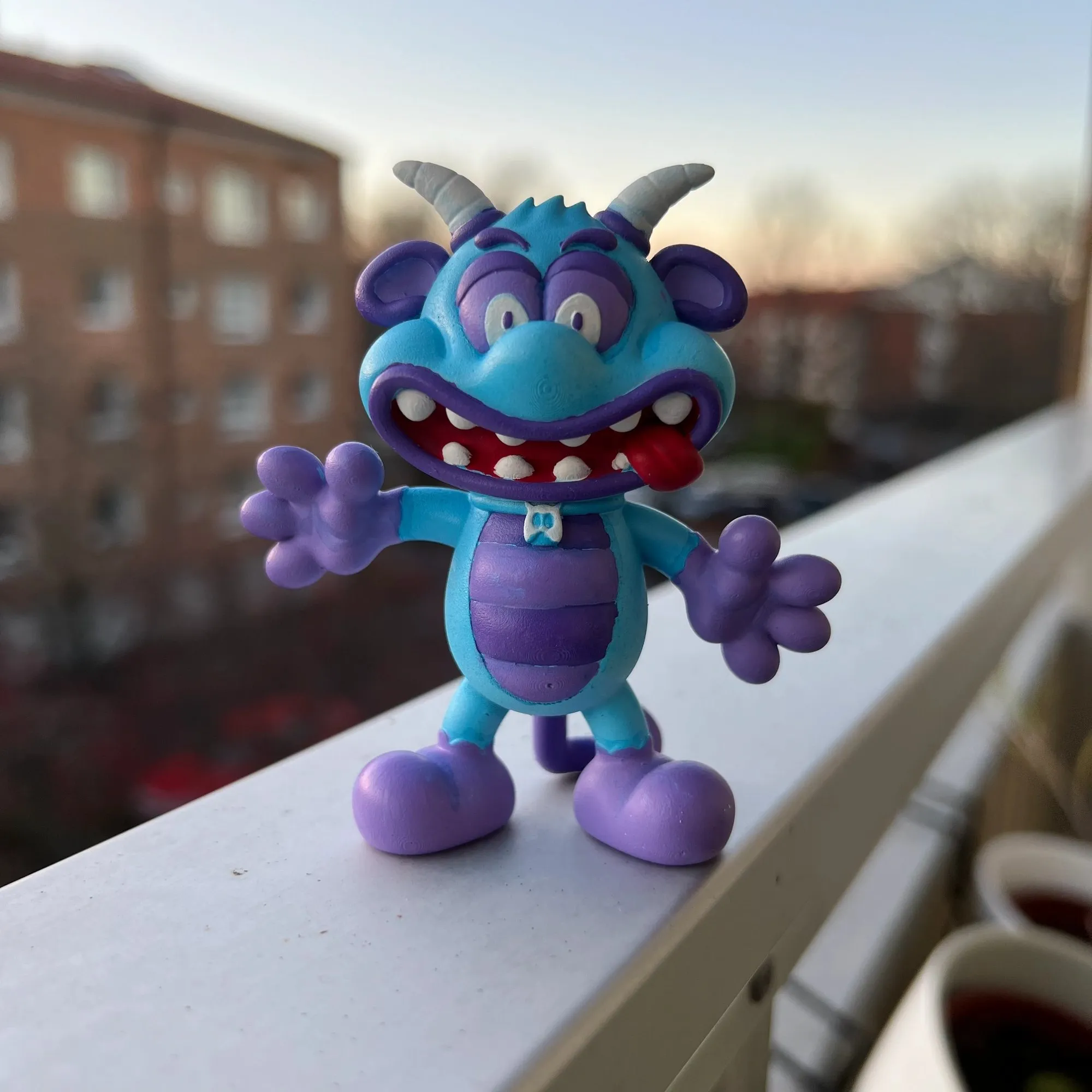
My second toy, The Koburingo, was printed this way. I also used my printer to check prototypes and sizes before sending anything to Japan. Resin 3D printing for art toys covers the printing itself.
2. A factory abroad: hard vinyl
What it is: a factory makes the toy in rigid vinyl, the smooth, polished material of Western designer toys. Many artists use factories in China.
- Good: cheap per piece and fast, with a professional finish. You can find factories through online trade platforms and searches.
- Hard: factory work comes in big runs. Around 200 pieces of one design is a realistic minimum, and the moulds and first production can cost several thousand dollars. A run of 500 is cheaper per piece than 100, but you have to sell them.
- Best for: designs you are confident can sell in the hundreds.
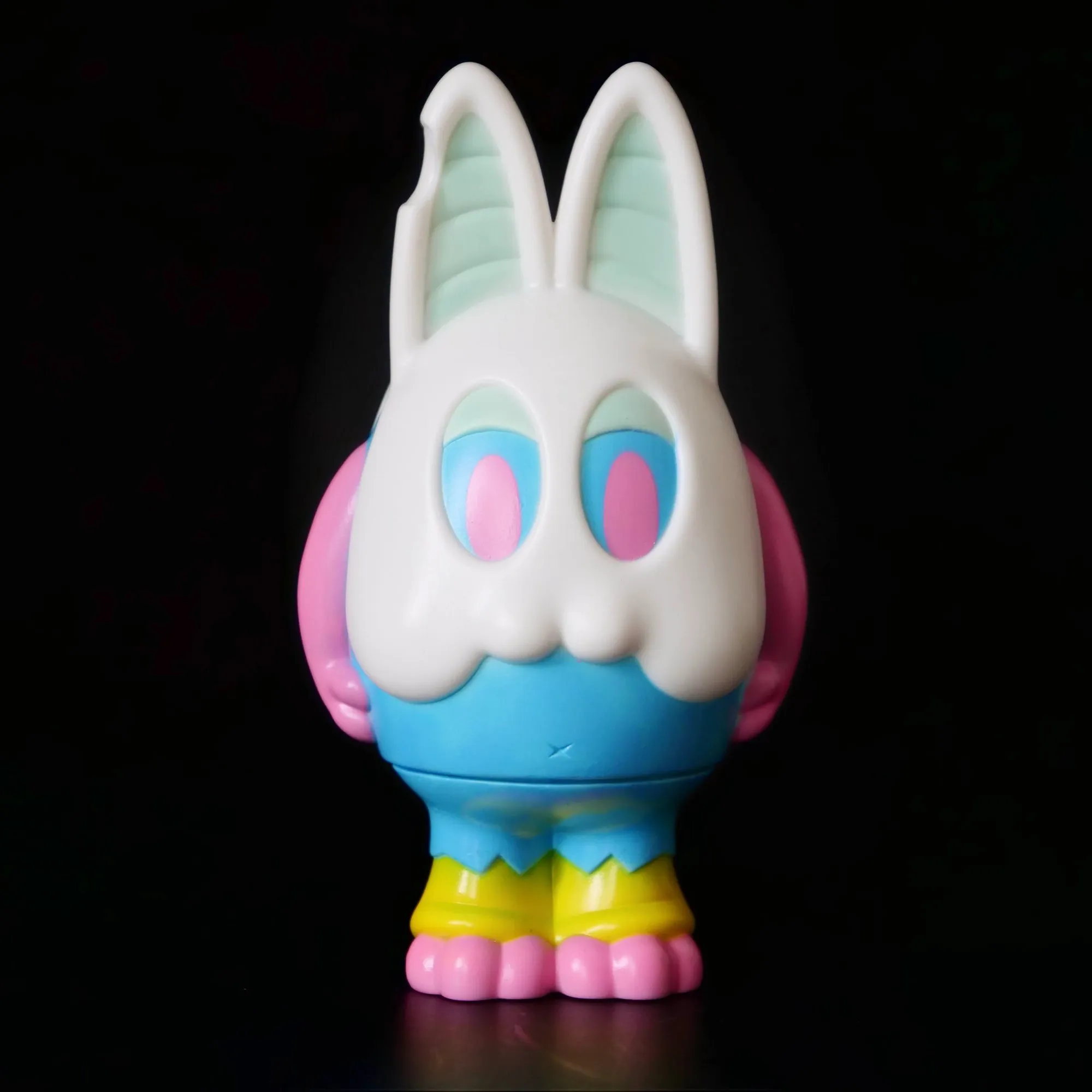
My first toy, Eggie, was made this way, in a factory in China. I moved away from China later, but I have nothing bad to say about it.
A middle way: you can order unpainted blanks from the factory and paint them yourself. The finish is less polished, but each piece becomes more unique. I did this with Eggie when a factory paint job needed around 200 pieces of one colour, too many for a small business.
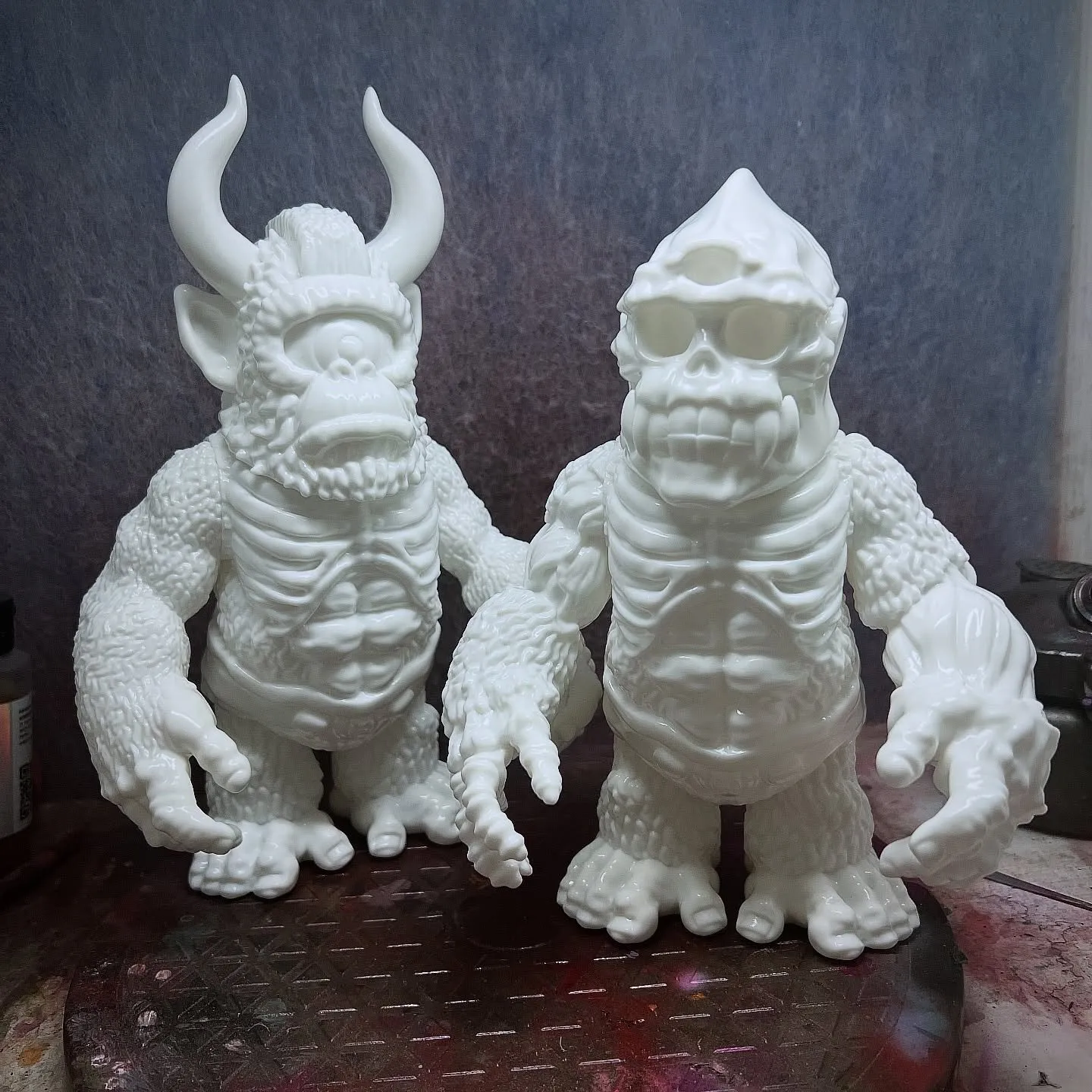
3. A sofubi workshop in Japan
What it is: a small Japanese workshop casts your figure in soft vinyl, the traditional way.
- Good: top quality, and the real thing that sofubi collectors want. I never had a problem with mine.
- Hard: it is not for beginners. You need a contact, and finding one took me about a year. Workshops are often run by one to three people, sometimes older craftspeople with little English. They take on few clients, and a single toy can take seven months to a year. It is also more expensive and slower than other options.
- Best for: when you know your design, your market and your money are ready.
Working with Japanese sofubi makers goes deeper into how that relationship works.
My rule of thumb
- Fewer than about 100 of a design, or just testing: resin.
- More than 100, and the money to do it: vinyl from a factory.
- A Japan contact, and a market in Asia and the USA: sofubi. But probably not for your first toy.
If I started again, I would print my first toy myself, see whether people buy it, and only then move to vinyl.
Whatever you choose
Weigh quality, speed and cost honestly. And never sell a poor-quality product: the people who buy your toys don’t deserve that.
Sources
I wrote this article from these videos of mine. Safety and product facts are checked against the manufacturers’ published data.