What is sofubi? Soft vinyl, hard vinyl and resin art toys
Sofubi is Japanese soft vinyl, cast in metal moulds and often finished by hand. Where it came from, how it is made, and how it differs from hard vinyl and resin art toys.
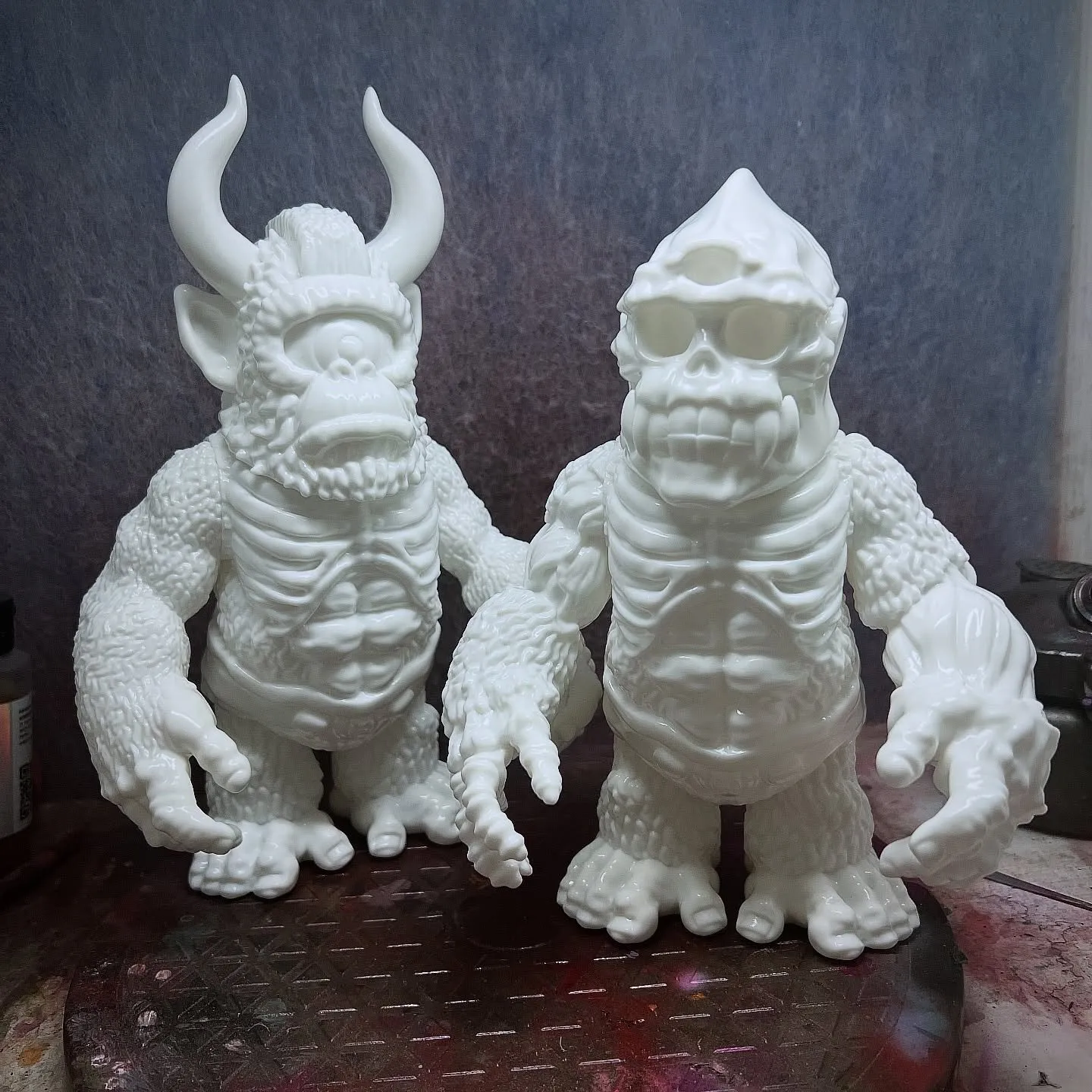
Pick up a sofubi figure and the first thing you notice is the give. The vinyl flexes slightly under your thumb, the surface has a soft sheen, and the figure is hollow and surprisingly light for its size. That feel is a large part of why people collect it. As I said on my podcast, sofubi is a material people love for itself: many collectors build whole collections around soft vinyl, and it feels more artistic and more unique than other toy plastics.
The word is a Japanese shortening of “soft vinyl” (sofuto binīru), sometimes written sofvi. It describes both the material and a tradition of making toys with it.
Where sofubi comes from
Soft vinyl toys appeared in Japan in the 1950s: a soft vinyl doll from 1954 is usually named as the first. They became a craze in 1966, with the television monster boom. Toy makers such as Marusan, and later Bullmark, made hollow vinyl kaiju and heroes from shows like Ultra Q and Ultraman. Marusan went bankrupt at the end of the 1960s; Bullmark, founded by former Marusan staff, took over all of Marusan’s moulds and ran until the late 1970s.
The children who played with those figures grew up. From the late 1990s, reissues and new figures were made for adult collectors, and over the past decade interest has spread well beyond Japan.
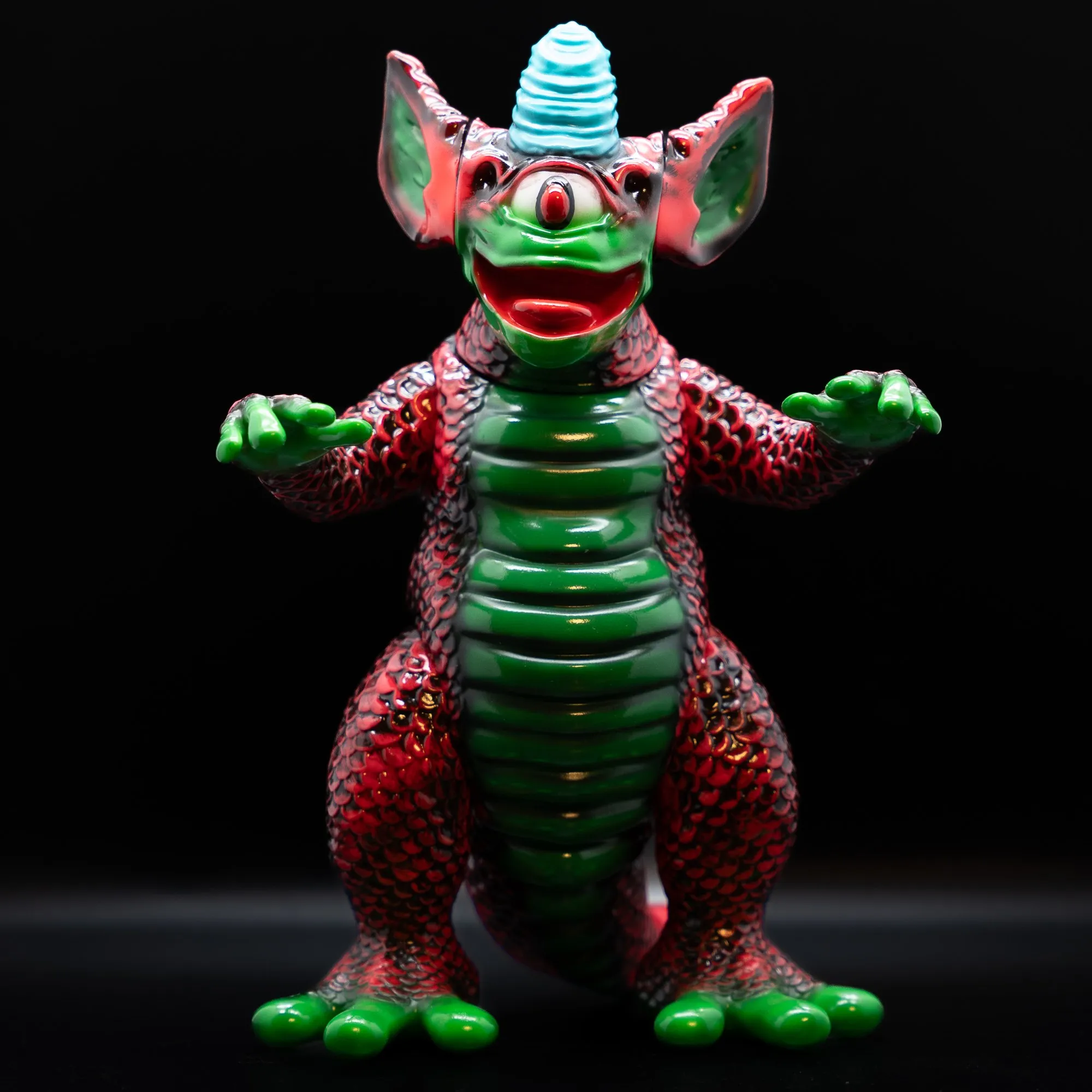
That history still shapes the look of the genre. Classic sofubi palettes lean on the colours of kaiju films: silver and red, monster browns and greys, plenty of metallics. A modern figure that borrows those colours signals its roots straight away. For anyone learning how the format works, a vintage-style figure is also a good teacher. Looking closely at one shows how the parts are divided, where the joints sit and how much detail the moulds can hold.
How a sofubi toy is made
The process is old, and much of it is done by hand in small workshops.
- A wax original. The design, often sculpted digitally and 3D-printed first, is turned into a wax master of each part.
- Metal moulds. The wax is electroplated to build up a metal shell, usually copper, and the wax is melted out. That shell becomes the mould. Each separate part, such as the head, body or arms, needs its own mould.
- Casting. Liquid PVC, a plastisol, is poured into the mould and the mould is heated. A skin of vinyl sets against the hot metal, the excess liquid is poured back out, and the hollow part is cured and cooled. This is usually called slush casting; some makers call it rotocasting.
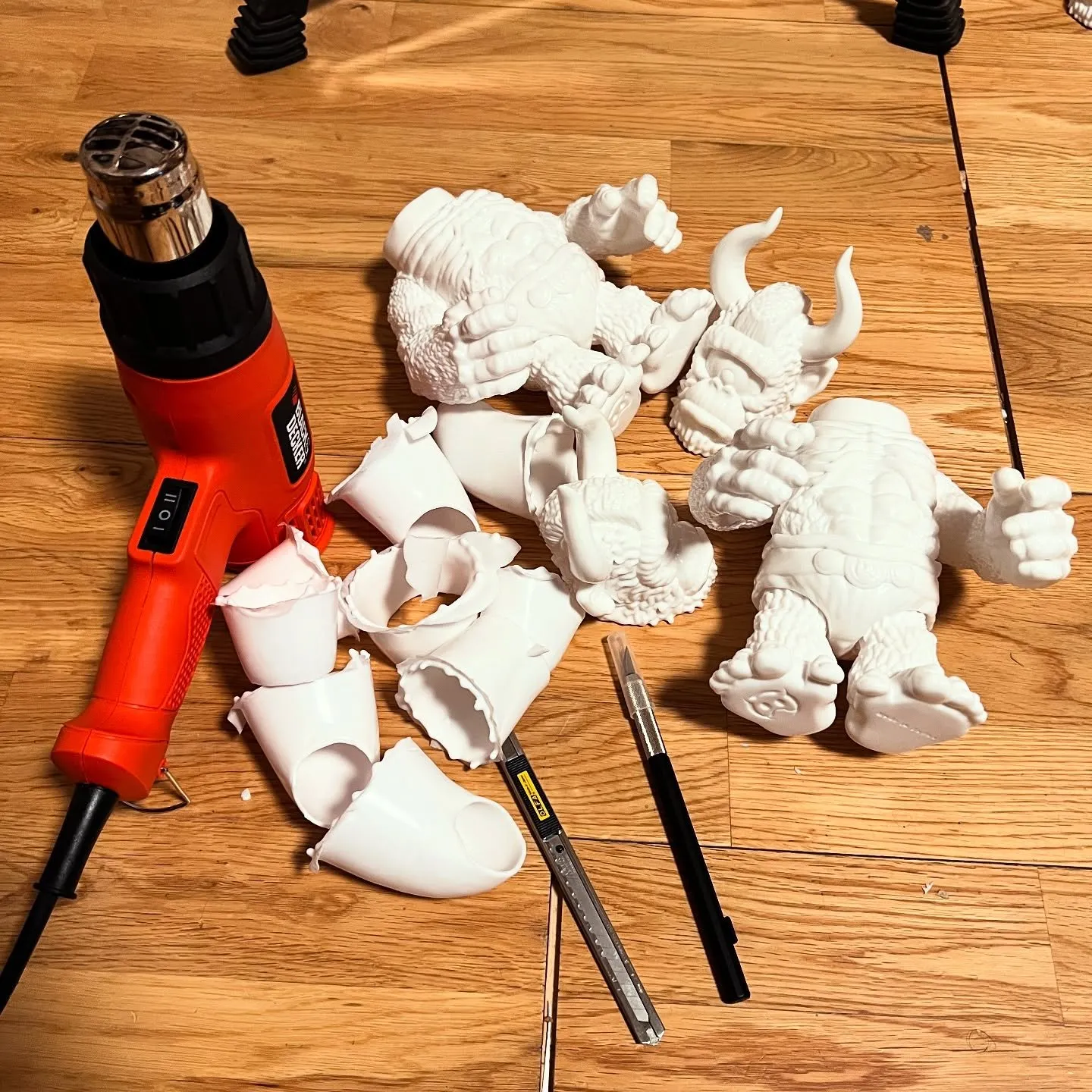
- Pulling, trimming and joining. The soft, warm part is pulled out of the mould. It is then trimmed, and the parts are pressed together while the vinyl is still pliable.
- Painting. Figures are sprayed by hand, often through metal paint masks made for each colour area.
The moulds and the wax are where most of the money goes. In an example cost sheet I shared on my channel, the wax for a large figure was around $2,500 and each metal mould around $1,000. The numbers were illustrative, but they show the shape of the costs: high up front, then a modest charge for every piece pulled from the mould.
Sofubi, hard vinyl and resin
Three materials dominate independent art toys. They differ in feel, in cost and in how many pieces make sense.
| Sofubi (soft vinyl) | Hard vinyl (“designer toy”) | Resin | |
|---|---|---|---|
| Feel | Soft, flexible, hollow | Rigid, smooth, crisp | Hard, heavy, very detailed |
| Made by | Small workshops, mostly in Japan | Factories, often in China | Anyone with a resin 3D printer, or by casting |
| Up-front cost | High: wax and metal moulds | Very high: factory moulds | Low: a printer and materials |
| Sensible run | Dozens to a few hundred | Hundreds or more | One to a few dozen |
| Painting | Often by hand through masks | Usually factory-painted | By hand |
Hard vinyl is the material of the Western designer-toy scene that grew in the early 2000s: rigid, polished and professionally painted. It needs factory production and large runs. In my experience, the realistic minimum is around 200 pieces of one design, with moulds and a first production costing several thousand dollars.
Resin has become the easiest way in. A home resin printer can produce a small run, ten figures say, to paint and sell before making more. The trade-offs are fragile parts, messy liquid resin, fumes that need proper ventilation, and a lot of sanding.
Sofubi sits between them. Making the moulds still costs money, but production is cheaper than hard vinyl and runs can be smaller, but finding a maker is the hard part. Traditional sofubi workshops are often run by one to three people. They take on few new clients, prefer people they expect to work with for years, and a single figure can take seven months to a year. My rule of thumb for a first toy is to start with resin, test whether people want it, and move to vinyl only when the demand and the money are there.
What soft vinyl means for design and painting
The material sets real limits, and they are worth knowing before you draw anything.
- Simple, chunky shapes work best. Thin protrusions and lots of small separate parts are hard or impossible to cast in soft vinyl. One of my early figures, The Koburingo, had to be released in resin instead, because its small parts and details would not work as sofubi.
- Fewer parts, planned joints. A figure designed for sofubi from the start is far easier to produce than one with many separate pieces. Bonnie, my first sofubi made in Japan, was planned in two main parts, body and legs.
- Paint has to flex. Ordinary acrylic airbrush paint sits on the surface and cracks when the vinyl bends. Sofubi needs paints made for soft PVC, which are solvent-based and need the same care as any solvent product.
- The surface needs preparation. New vinyl carries an oily film from the factory, so parts are washed before painting.
Size and value
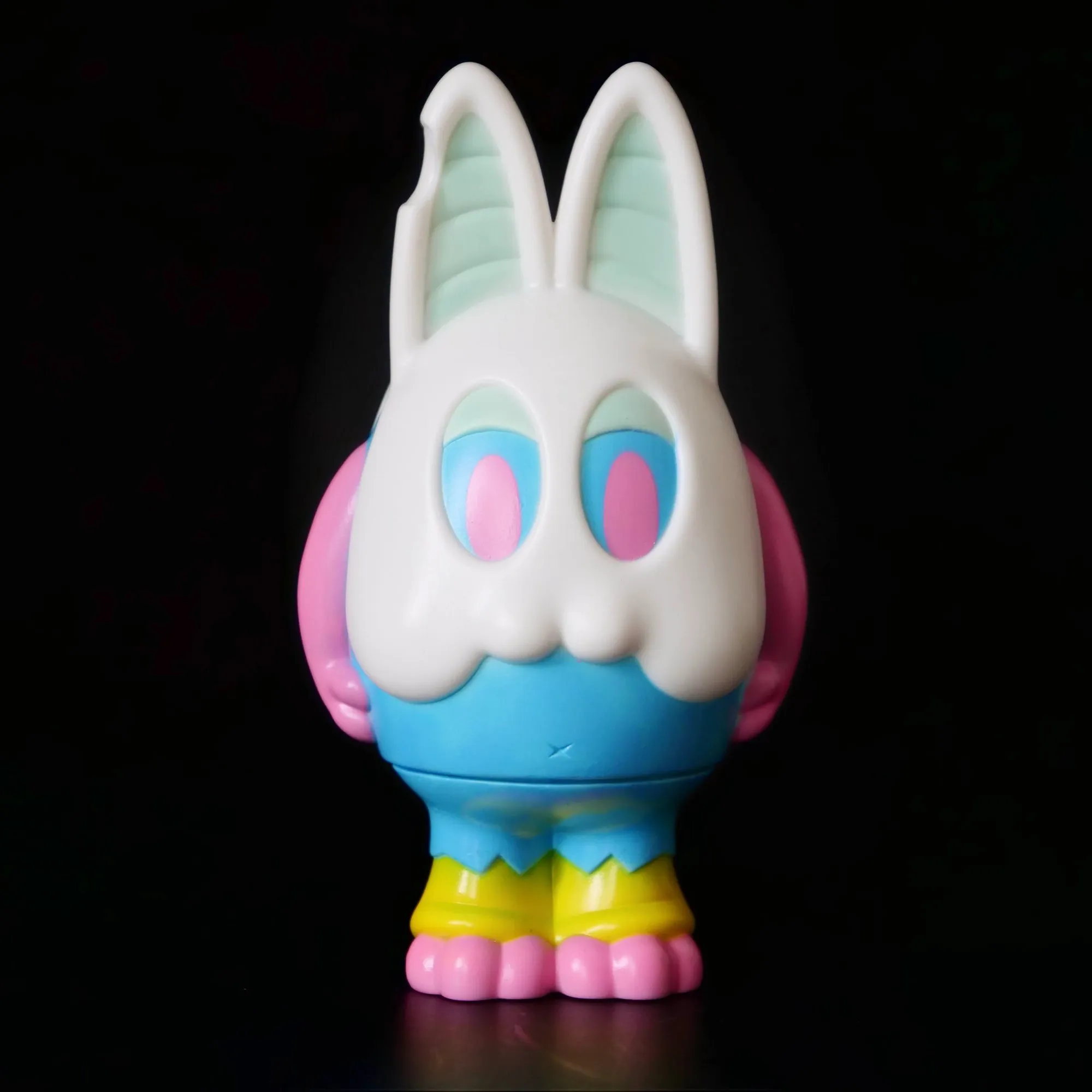
Because sofubi is often sold online and shipped across the world, size matters more than you might expect. A small figure with no packaging can struggle to justify international shipping. My first toy, Eggie, was about 12 cm tall. My later sofubi figures, Geckogon, Borgor, Gargan and Belok, all settled on a standard height of 25 cm, packed with a printed header card like traditional Japanese sofubi. At that size, collectors abroad felt the toy was worth the postage.
Where to go next
If you want to make a sofubi figure, start with the design limits: Designing for production covers what moulds and paint masks can and can’t do. If you already have a blank figure in front of you, Preparing sofubi for paint is the first practical step.
Sources
I wrote this article from these videos of mine. Safety and product facts are checked against the manufacturers’ published data.
- Making an Art Toy #1 2022
- Making an Art Toy #2. Inspiration 2022
- Curating the Art Toy Collection 2024
- Understanding the Sofubi Market 2025
- How to make an Art Toy #1 2022
- Art Toy Prototypes 2022
- Paint Mask For Art Toys & Sofubi 2022
- How and Where to Produce Art Toys! 2022
- Preparación para el pintado de Sofubi 2024
- Tools & Paints 2022
- Sofubi Sizes + NEW SOFUBI TOY! 2025
- Pricing Art Toys 2023