The craft mindset: repetition, organisation and small steps
Is painting forty identical figures boring? How I learned to love the repetition, the five things I saw in every artist who succeeds, and how I kept a one-person studio organised.
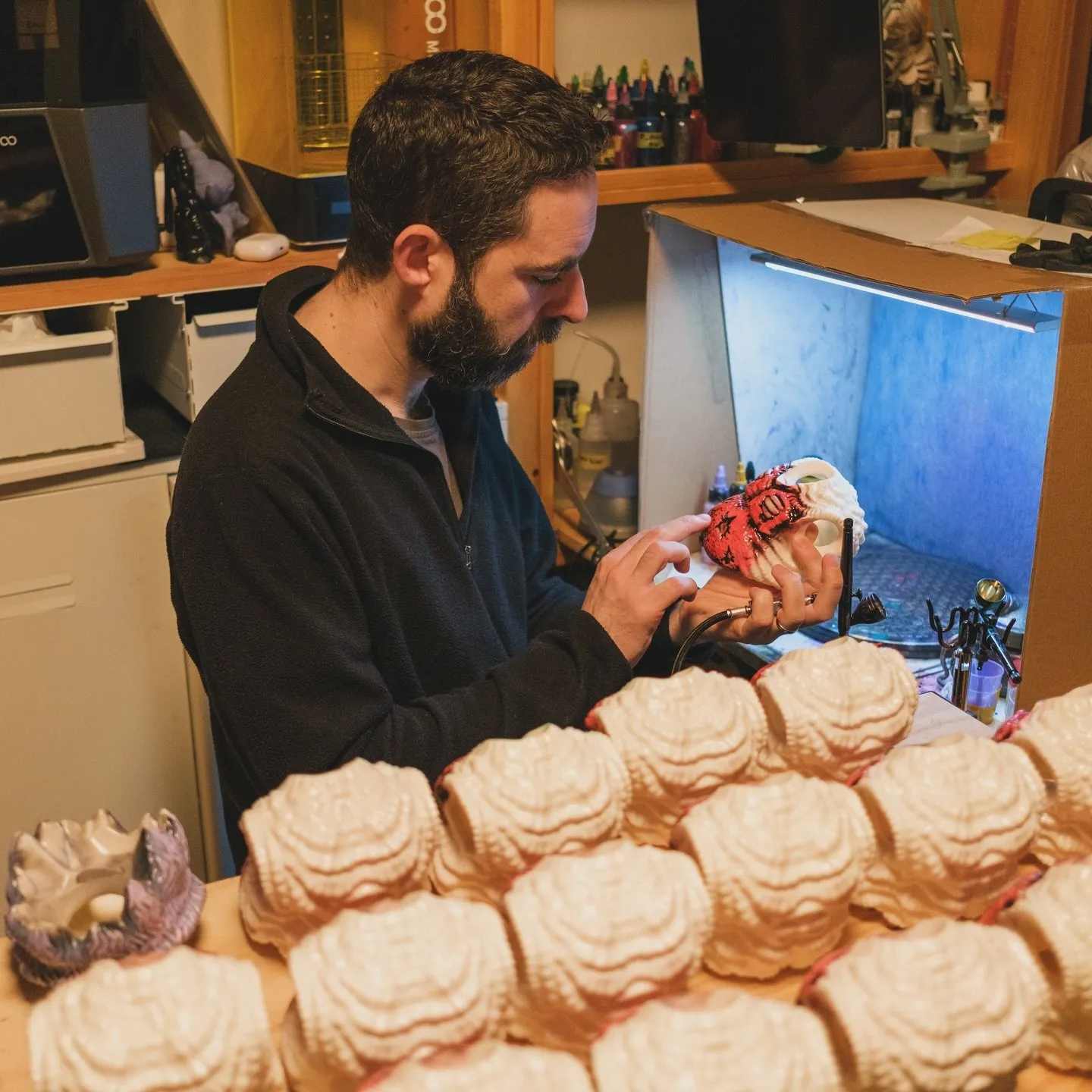
People often asked me: isn’t it boring to paint forty identical figures? Or to take the same photos and film the same steps again and again? It is a fair question. My answer is that you have to love the process, all of it, from the first sketch to the moment you ship the toy.
Love every step
Each stage has its own kind of joy. Sketching is turning a fantasy into something on paper: frustrating at times, but enjoyable. The back-and-forth with the 3D modeller was, for me, the most exciting part. Then comes the factory, and then the painting.
Not every step goes well. Colour prototypes often fail, and you repaint them. Joints don’t work, or a head comes back turned the wrong way, and that means more letters and more waiting. If you only love the result, those steps will wear you down. If you love the process, they are just part of the work.
The craftsman’s way
Orders of forty or fifty figures were normal for me, and painting them could take months. What changed how I felt about it was an idea from a Japanese craftsman: a craftsman does the work, however repetitive it is, and does it well.
So I put on music or a video, and I painted. I felt relaxed, and grateful to be doing it.
Five things I saw in artists who succeed
I spent time studying artists who had made it, and the same five things kept coming back:
- They know their market. Designing for a market covers this.
- They have contacts: artists, factories and sellers who work together.
- They work hard and keep going. This is the biggest key of all.
- They have passion, which is not the same as hard work. You need both.
- They are organised. They work with systems, not chaos.
And then, once you have done your part, let life do its thing. Not everything is up to you.
Getting organised
A one-person studio has to keep track of a surprising number of things: which paints go with which toy, how many toys to make this year and next, how many sales you need, how many videos per week, the costs, the factories, and which shops to contact and when.
I kept almost all of it in one notes app: the background stories of the characters, drafts, shipping details, each toy’s description and price, sales tables and photos. Next to it, a calendar for deadlines and a simple to-do app. These are not recommendations, only what worked for me. Choose your own tools, but choose some.
Small steps, and starting again
After three years I realised I had been doing many things wrong, simply because nobody had told me how. I called it “tabula rasa”: a clean slate. I started again, simpler and more focused.
Take small steps, and look back at each one before the next. If you don’t, you will repeat the same mistakes.
And if you don’t know where to begin, you don’t need much. A pen and paper. Write down what you want to become. Then go, slowly, but always forward.
Sources
I wrote this article from these videos of mine. Safety and product facts are checked against the manufacturers’ published data.