A safer small studio: respirators, ventilation and fumes
The real hazards of making art toys in a small room, and what I changed after my first masks failed: ventilation, a respirator that works with a beard, gloves, a safer spray booth and simple house rules.
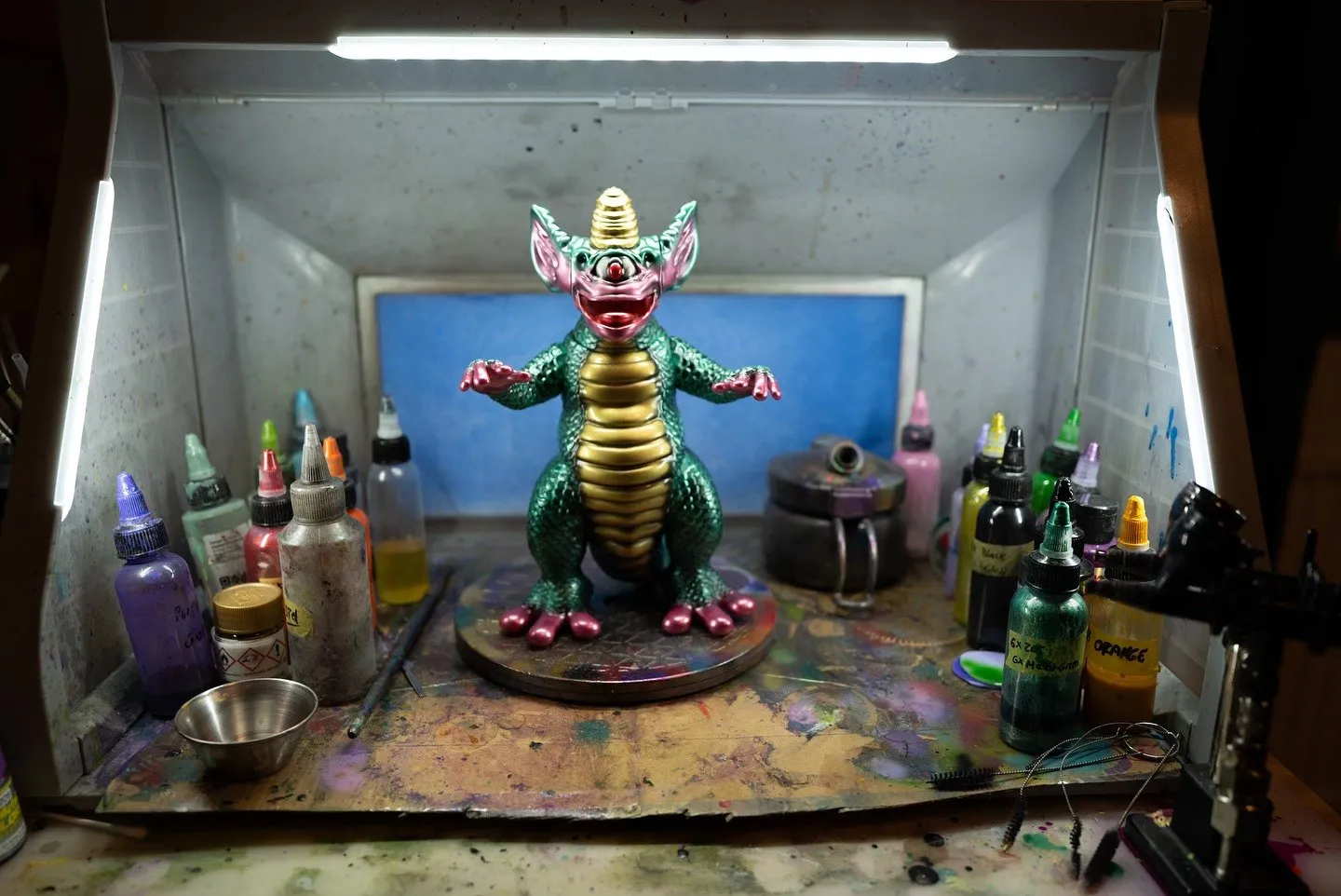
When my first toy was made, the factory did everything, and the factory had its own safety rules. As Art Fabula grew, the work moved into my own small room: a resin 3D printer, solvent paints, an airbrush, and not much ventilation. It took me too long to take that seriously. This article is what I wish I had known at the start.
I am not a safety professional. Read the safety data sheet of every product you use, and follow your local rules.
The hazards in an art toy studio
- Solvent vapour from paints, thinners and cleaners. It can make you dizzy and irritate your airways, and it is flammable.
- Paint mist from the airbrush: the same solvents, plus pigment, as fine droplets you breathe in.
- Liquid resin and its fumes from resin 3D printing, washing and curing.
- Fumes from overheated vinyl when you warm parts with a heat gun.
- Fire, because many of these products are flammable and there are always electrical devices nearby.
Ventilation comes first
A mask is the last line of defence. The first is getting the vapour and mist away from you before you breathe it. Extraction that captures fumes at the source, like a spray booth that pulls the mist away from your face, works far better than just opening a window.
I learned this the hard way. My room was small, and my first spray booth blew its exhaust back into the room. Even with a mask, I could smell the fumes.
An air purifier helps too, but only the right kind. A normal HEPA filter catches particles, not gases: solvent vapour passes straight through it. For fumes you need an activated carbon filter, and a thin one won’t last long.
Respirators, and why my beard mattered
My first half mask didn’t seal properly, so I moved to a full-face mask. After a few days I could still smell paint inside it, and my throat started to suffer. The problem was my beard.
A tight-fitting mask only protects you if it seals against your skin, and hair in the way breaks the seal. UK health and safety guidance says people who wear tight-fitting masks must be clean-shaven where the mask seals.
My solution was a powered air-purifying respirator: a unit on a belt with two filters, pushing clean air through a hose into a hood. The air inside is always under slight pressure, so it flows out, not in. With a beard, it was the only thing that worked for me. Loose-fitting powered hoods like this are the standard alternative for people with facial hair, because they don’t depend on a seal.
Whatever you choose, make sure the filters match what you work with: solvent vapour needs filters for organic vapours, not just dust filters.
Gloves and eyes
- Nitrile gloves. Thin latex gloves break down when they are soaked in solvent. Nitrile was the only kind that held up for me, and it is what the paint maker’s safety data sheets specify. For long contact with a solvent-soaked cloth, use thicker chemical-resistant gloves.
- Sealed goggles. These paints can seriously damage the eyes.
- Ear protection. A spray booth can be loud. I wore ear protection while painting.
Spray booths and fire risk
My first spray booth was a cheap one bought online. The filter clogged in less than a month, and paint ended up everywhere inside it. Worse, its fan and cables sat right in the airflow, in a stream of flammable paint and thinner vapour. Many people don’t realise that. I was, honestly, risking my life.
UK guidance on spraying names unprotected electrical equipment as an ignition source for solvent vapour. A safer booth keeps its motor out of the vapour stream, filters the air before it reaches the fan, and uses equipment made for flammable vapour.
I replaced mine with a booth built to be spark-safe: a metal body, better filters, a log card for filter changes, more airflow and less noise. It cost more and had to be imported, but I didn’t want to keep a fan inside a cloud of solvent.
Keep flames, heaters and anything that sparks away from where you spray or store solvents.
Resin printing
Resin printing gives off fumes during printing, washing and curing. My printer had small carbon filters inside, I ran the air purifier, and I left the room while it printed. Wear a mask and gloves when you handle liquid resin. Don’t do as I sometimes did, and forget to charge the filters.
Measuring the air, and what a meter can’t tell you
I bought a VOC meter to see what was in the air. It was useful, but it has limits: it measures a mix of many compounds as one number, and it can’t tell you which ones are harmful. Treat it as a warning light, not a safety certificate. When the reading rises, stop, ventilate, and leave the room.
My house rules
These are the rules I set for my own studio:
- Nobody stays in the room without protection while the printer runs or while I paint.
- When I finish, I open the window, leave the room with the door open, and let it air for about an hour.
- Gloves and goggles every time solvent is involved, not just “when it’s a lot”.
- Lids back on bottles straight away, and used rags in a closed container away from heat.
I wish I had started earlier. Thinners, resin and printing fumes are dangerous, and the damage builds up slowly. Protect yourself before it’s too late.
Sources
I wrote this article from these videos of mine. Safety and product facts are checked against the manufacturers’ published data.