Pricing a sofubi toy: a simple cost model
The four-column cost sheet I used to price my figures, a worked example with illustrative numbers, and how profit, shop margins and tax change the final price.
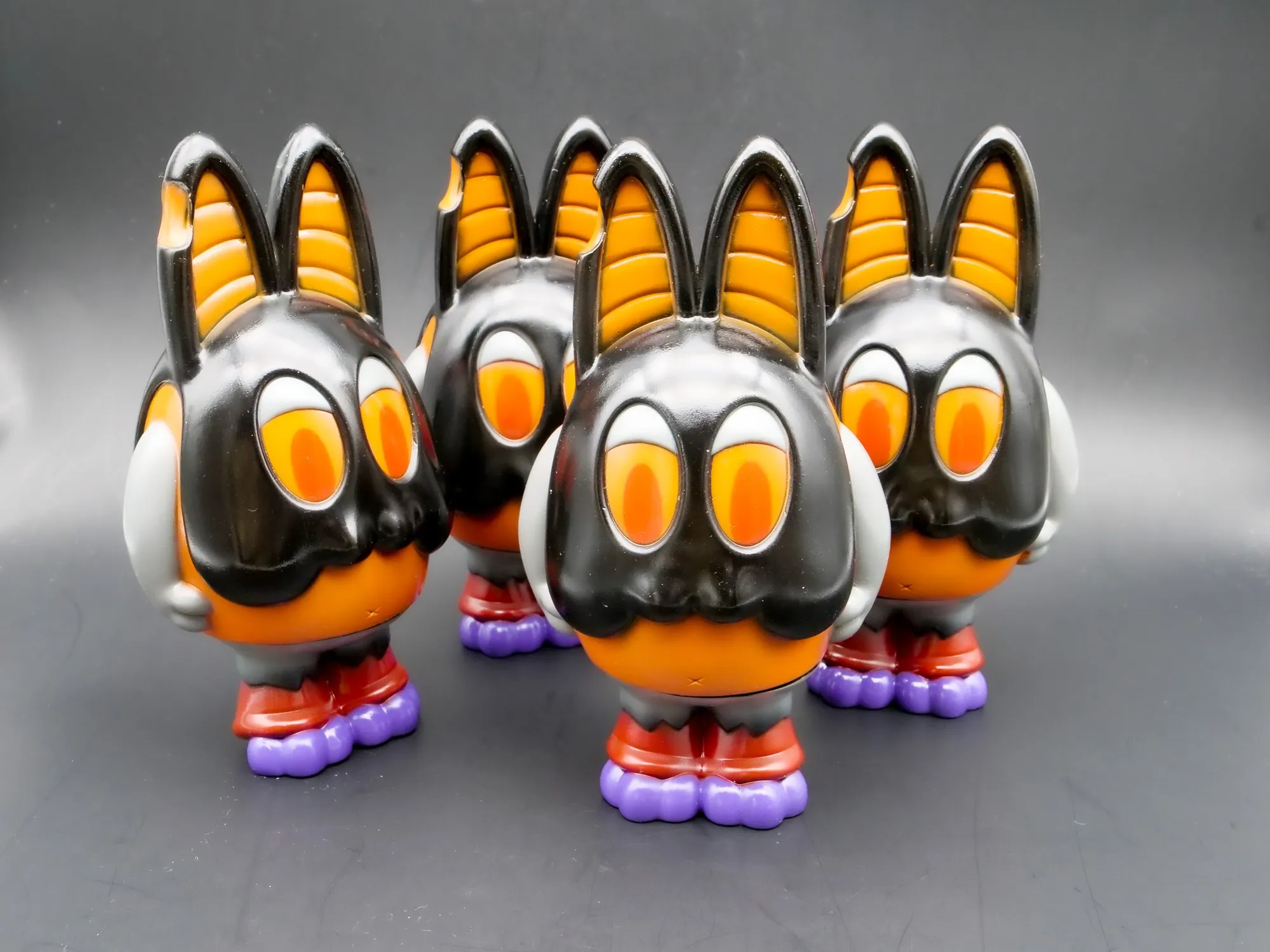
Before I produced a toy, I wanted to know exactly what each piece would cost me, and how that cost changed with the number of pieces I made. Guessing is how small toy makers lose money. So I used a simple system: one sheet, four columns, every step of the production on its own line.
The four columns
- Step. Every stage of making the toy, from design to packaging.
- Cost of that step. I worked in yen, because I paid the factory in Japan.
- Number of pieces. This is the variable you play with.
- Cost per piece. What each toy costs you, given the number of pieces.
Two kinds of cost
Some costs you pay once, whatever the size of the run: the 3D design, the wax original, the metal moulds, the packaging design. Others you pay for every piece: pulling each part from the mould, the bag, the printed card. The once-only costs are what make small runs expensive, because they are shared between fewer toys.
A worked example
These numbers are from an example I prepared for my channel. They are not the real prices of any one of my toys, but they are very similar to real ones for a big sofubi figure.
| Step | Cost | Paid |
|---|---|---|
| 3D design | about $500 | once |
| Test print and changes to the model for the factory | varies | once |
| Wax original (a big toy) | about $2,500 | once |
| Metal moulds, two at about $1,000 each | about $2,000 | once |
| Pulling each piece from the moulds | about $15 | per piece |
| Shipping from the factory | about $700 | once |
| Shipping from Japan to Europe | varies | once |
| Fees on each payment to the factory | varies | per payment |
| Header card design | about $200 | once |
| Bag, printed card or illustration, box | about $0.50 each | per piece |
With 300 pieces, everything in this sheet came to about $43 per toy.
To see where that comes from: the fixed costs with a number on them add up to about $5,900, which is roughly $20 per toy across 300 pieces. The per-piece costs add roughly another $16 to $17. The rest of the $43 covers the lines marked “varies”: the test prints, shipping to Europe and payment fees.
From cost to price
The cost per piece is not the price. On top of it I added:
- My profit: around 40 to 50 percent.
- Room for shops: around 30 percent more, if I wanted to sell to shops at a wholesale price.
With the example’s $43, that takes you to a little over $60 with profit, and to around $80 once there is room for a shop’s margin.
How much room you need depends on where you sell. In my experience, shops in Japan worked with around 30 to 35 percent of the retail price, while shops in the USA and Sweden wanted around 45 to 50 percent. Some European and American shops told me that 30 percent off was simply too little for them. Decide early whether you sell to shops more cheaply for the exposure, or keep the margin for yourself.
Run size: the trap
If the cost per piece is too high, the obvious fix is to make more pieces. Raise 300 to 400 and each piece gets cheaper. But if it is already hard to sell fifty or a hundred of one figure, selling four hundred is much harder.
So the sheet answers a bigger question than “what should it cost?”. If the number of pieces you need to reach a sensible price is more than you can realistically sell, ask yourself honestly whether this toy is worth producing at all.
For a complicated design, the money you put in before you sell anything can reach $8,000 to $10,000, and getting it back can take four to ten years. Sofubi is a marathon, not a sprint.
Tax and the price your buyers see
Where you sell from changes what your buyers pay. Sweden adds 25 percent VAT for buyers in Sweden and the rest of the EU, so the same figure costs them noticeably more than it costs a buyer in Japan or the USA. A Geckogon at around $75 became more than $90 for a European buyer.
I kept my prices similar for Japan and the USA so that nobody felt cheated, and I did not absorb the VAT, because my profit was already small. In 2025 I set a new standard price for my sofubi figures: 110 dollars for Gargan.
Import taxes matter too: when toys made in Japan arrive in Europe, you pay import VAT on arrival.
The costs nobody puts in the sheet
The most expensive part is often not the production but everything around it: selling, the website, shipping, taxes, and your own time. Put them in the sheet too, even if only as a rough line.
And one piece of advice I feel strongly about: don’t take a loan to make toys. Start small, with money you can afford to wait for.
Selling art toys from Europe and Before you start: the honest economics of making art toys will go further into the business side.
Sources
I wrote this article from these videos of mine. Safety and product facts are checked against the manufacturers’ published data.