Paint masks for sofubi: tape, liquid and metal
What a paint mask does, the three kinds you will meet, what separates a good metal mask from a bad one, and how to design a toy that needs fewer of them.
When you paint one figure, you can take your time over every edge. When you paint eighty, you need a way to put the same colour in the same place, quickly and cleanly, every time. That is what a paint mask is for. It covers the parts of the figure you don’t want to paint, so the airbrush only reaches the area you choose.
Three kinds of mask
Tape. Masking tape is the cheapest option and works well for straight lines and simple shapes. On a sculpted, curved figure it is slow to apply and hard to keep tight in the recesses.
Liquid mask. You brush it on, let it dry, spray, and peel it off. It follows any shape, which makes it useful for one-offs and small areas, but you have to apply it again on every piece.
Metal masks. These are what factories use for mass production: thin metal shells made to fit one part of one figure, with openings where the paint should go. You hold the part inside the mask, spray, and take it out. Once you have them, they make painting hundreds of toys fast and precise. But a full set can cost about as much as producing the toy itself.
What a good metal mask looks like
I have used metal masks made in Europe and masks made in Japan, and the difference taught me what to look for.
My European masks were sturdy, but big and awkward to handle. They didn’t sit tight against the figure, so paint crept underneath, along the belt for example, and opening and closing them scratched the layers I had already painted.
My Japanese masks were small, opened and closed with one hand, and fitted the part precisely. They were also softer inside, so they scratched the paint much less. The price was not very different. If you have the choice, those are the qualities to ask for: a tight fit, a small size you can hold in one hand, and an inside that won’t mark the paint.
One small trick: a slightly warm vinyl part settles into the mask more easily than a cold one.
Using masks without ruining the paint
Masks are not perfect, and you will still need a steady hand.
- The seam line. Where the front and side of a mask meet, a faint line can appear on the figure. I fixed it freehand with the fine airbrush.
- Scratches. Taking a part out of a mask can scratch fresh paint. Let the paint dry before you remove the part, handle it gently, and touch up the marks freehand.
- Check every piece. In a batch of around eighty figures, I looked over each one before it moved on. Small mistakes are easy to fix at that stage and annoying to find later.
The expensive mistake: designing without thinking about masks
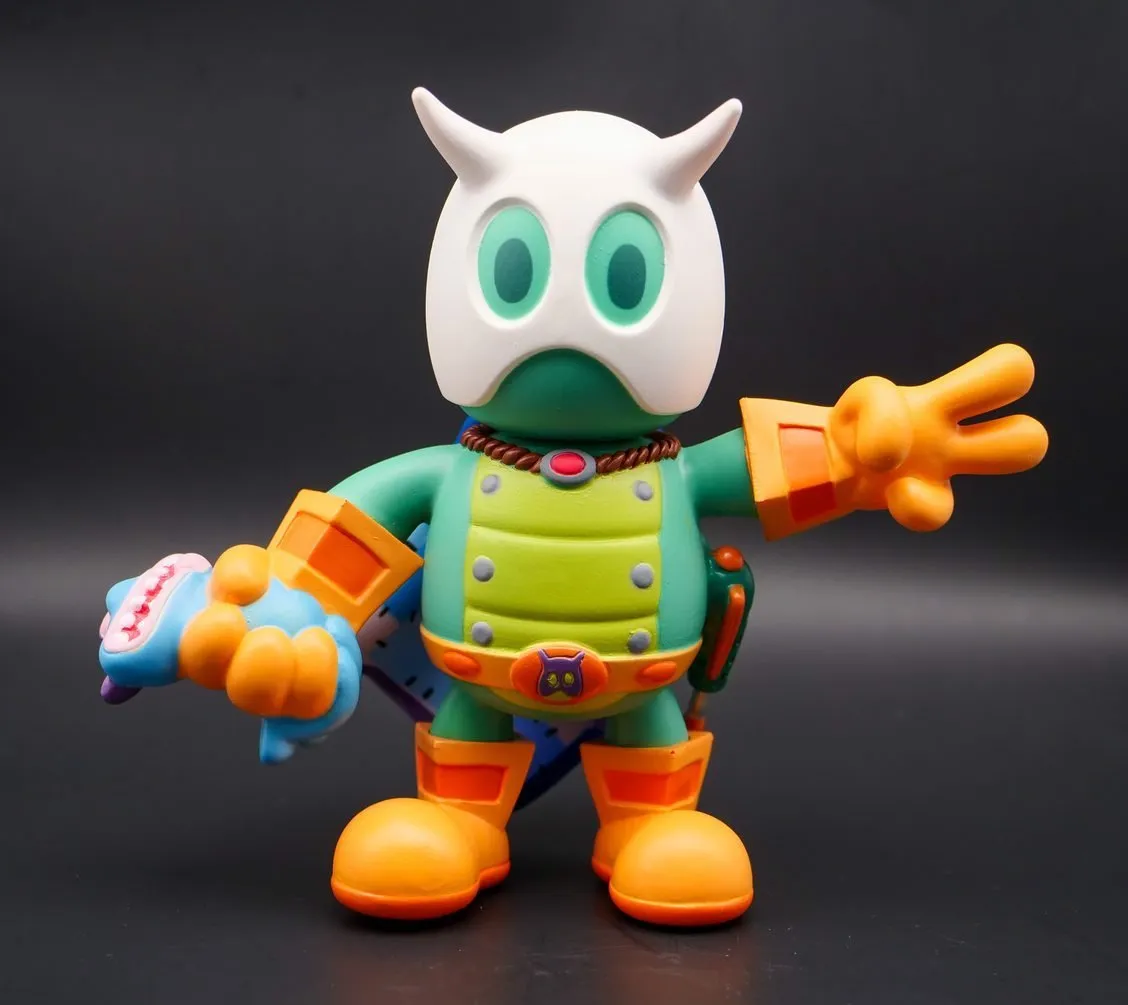
This is the lesson that cost me the most. I designed Captain Bpop with many colours and small details, without thinking about how it would be painted. The factory made around thirty to thirty-six masks for it. Even a small mask cost around 100 euros or dollars, and in the end I didn’t even use all of them. Some details were simply faster to paint by brush.
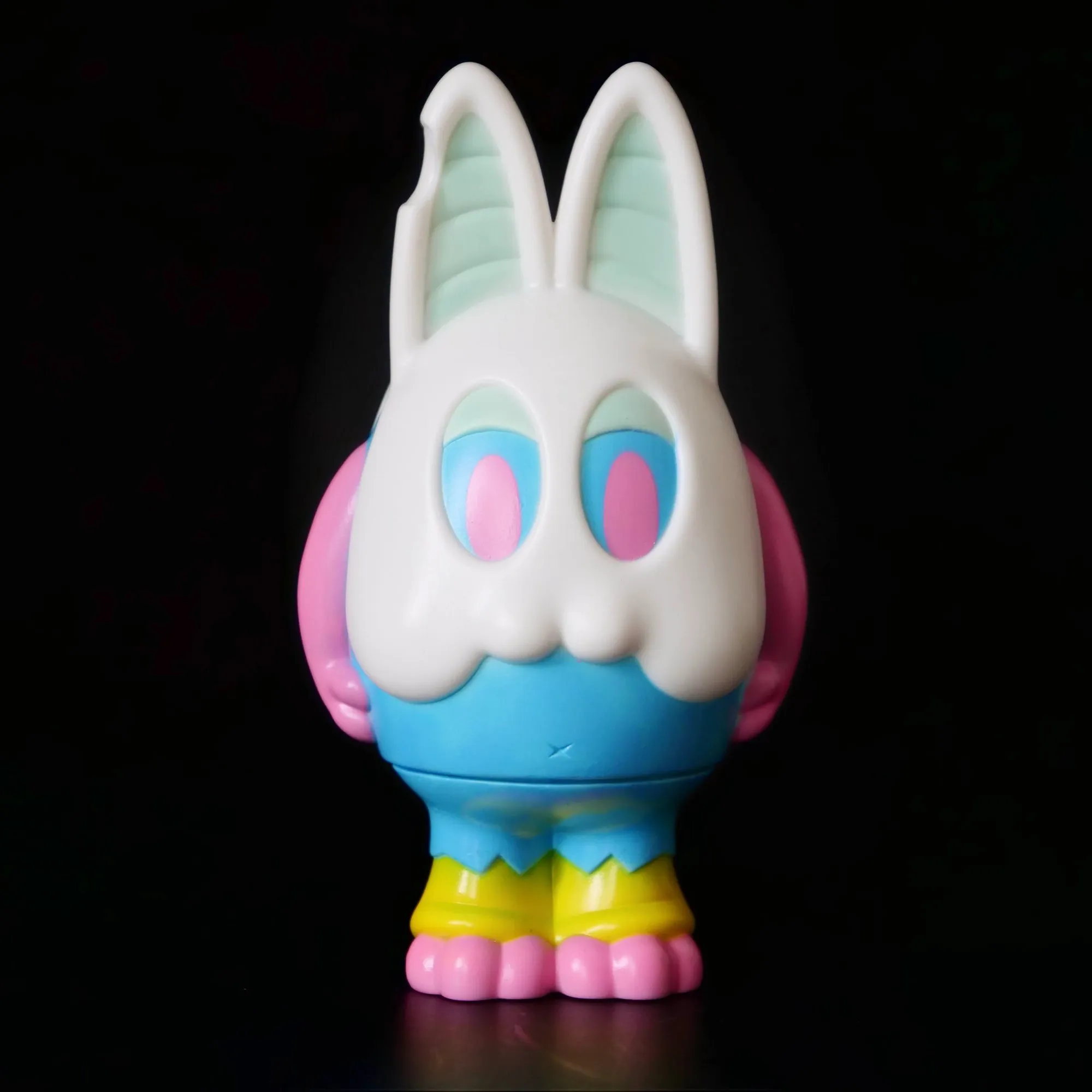
Eggie had the opposite problem. It has many separate parts, backpack, hands, legs and shoes, and every detail would need its own mask, at 300 dollars or more each. So I never had masks for Eggie, and I painted it freehand with the airbrush.
Compare that with Bonnie, which was designed for sofubi in just two main parts. A couple of Japanese masks for the body and the eyes were enough to paint whole batches.
Design so you need fewer masks
If you are designing a toy that will be painted in numbers, think about the painting at the same time as the shape:
- Keep the forms simple. Large, clear areas are easy to mask and easy to spray.
- Limit the colours. Around three main colours is a good target. Every extra colour can mean another mask.
- Avoid fiddly two-tone details. Eggie’s two-tone feathers look good, but they are hard to paint on every piece.
- Decide what will be masked and what will be brushed before you order the masks, so you don’t pay for masks you won’t use.
Designing for production covers the rest of what moulds and masks can and can’t do. Thinning and airbrushing sofubi paint covers the spraying itself.
Sources
I wrote this article from these videos of mine. Safety and product facts are checked against the manufacturers’ published data.